

If you’re already juggling work, family, and the 47 things you meant to do yesterday, being told to “just relax” can feel like one more thing to get right.
So let’s make this simple: heart coherence and meditation can both be useful ways to pause and meet stress. There isn’t strong evidence that one reliably lowers stress faster for everyone. Heart coherence offers a particular doorway: attention, comfortable breathing, and a deliberately chosen feeling. Meditation comes in many forms and can use breath, sound, movement, or other anchors.
You don’t have to pick a forever favorite. You can try both and notice what feels supportive for you.
The short answer: it depends on what you mean by “faster”
If you mean, “Which practice can help me feel steadier in the next few minutes?” a brief breathing practice may feel accessible because it gives you something concrete to do. If you mean, “Which one has been proven to reduce long-term stress more quickly?” the evidence doesn’t give us a clear winner.
That distinction matters. A practice helping you feel calmer right now is valuable, but it doesn’t prove that it will resolve ongoing stress, anxiety, or burnout on its own.
| Heart coherence | Meditation | |
|---|---|---|
| A common starting point | Focus around the heart, breathe comfortably, invite a positive feeling | Rest attention on an anchor such as breath, sound, or body sensations |
| What you practice | Directing attention and intentionally shifting your emotional tone | Noticing what’s happening and returning attention when the mind wanders |
| May suit you if… | A guided, structured reset feels helpful | Quiet observation or another contemplative practice appeals to you |
| Important note | It isn’t a guaranteed shortcut or a diagnosis | It’s a broad family of practices, not one single technique |
Both can involve breathing and attention. Some meditations also include feelings like kindness or gratitude, so the practices can overlap. Heart coherence is not “meditation, but better.” It’s simply a different door into steadiness.
What is heart coherence?
In everyday coaching language, heart coherence is a practice of bringing attention, breathing, and emotion into a more settled rhythm. Some HeartMath tools also display a pattern based on heart-rate variability (HRV): the natural variation in time between heartbeats.
Slow, comfortable breathing can influence some measures of HRV while you’re practicing. That’s an interesting body signal, not a magic scorecard. HRV changes with breathing, posture, activity, and how it’s measured; a number on a screen doesn’t tell the whole story about your wellbeing.
Research is encouraging in some areas, but it’s still a developing field. The HeartMath Institute’s public research page shares its research library and related work. The Institute is a separate research nonprofit; it is not the organization that administers my coaching certification.
As a HeartMath-certified coach, I’m trained to guide this practice, with certification administered through HeartMath Inc. That’s different from claiming a technique is a cure-all, or that it replaces support from a qualified health professional.

Try the Quick Coherence® technique
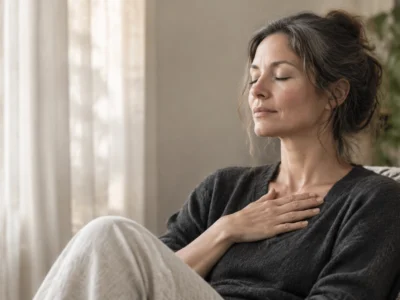
You can experiment with this gently, without special equipment. Sit comfortably if you can. There’s no need to force a huge breath or manufacture a feeling.
Step 1: Focus. Focus your attention in the heart area. Imagine your breath flowing in and out of the heart or chest area, breathing a little slower and deeper than usual. You might try about five seconds in and five seconds out, or choose whatever rhythm feels comfortable.
Step 2: Experience. Make a sincere attempt to experience a regenerative feeling, such as appreciation or care. It can be something small: a person who makes you feel safe, a pet greeting you, or a moment you’re glad happened. No need to summon fireworks. A quiet sense of care counts.
The Quick Coherence® technique was developed by and is a registered trademark of HeartMath.
If focusing on the chest feels uncomfortable, choose another gentle point of attention or stop. Breathing should stay comfortable. If you feel dizzy, return to your normal breathing. This is a practice, not a test you can fail.
And what about meditation?
Meditation doesn’t require an empty mind, a perfect cushion, or a Himalayan view. You might sit for a few minutes, feel your feet on the floor, and notice your breath. When your mind wanders, which minds do, you gently return to your chosen anchor. That returning is part of the practice, not evidence that you’re bad at it.
Some people enjoy guided meditation; others prefer walking, a body scan, or a few quiet minutes with a cup of tea. If sitting still makes you feel more activated, another kind of practice may feel kinder. It’s okay to adapt.

What does the research say about which works faster?
A randomized study comparing physical activity, mindfulness meditation, and HRV biofeedback found improvements across the groups, but no significant differences between the treatments. It’s a useful comparison, though not a final verdict: 126 adults were assigned, and 76 took part in the interventions. Read the study.
A separate meta-analysis of mindfulness and meditation studies found that evidence for changes in resting vagally mediated HRV was mixed, with substantial variation across studies. And research on structured breathing has found benefits for mood and immediate arousal in some settings, but that doesn’t mean breathing techniques consistently outperform meditation or produce lasting change by themselves. Explore one breathing study.
So, the honest answer is: we can’t promise heart coherence will lower your stress faster than meditation. A comfortable slow-breathing exercise may influence some HRV measures during practice, while the experience of calm is personal. Neither is a universal fix for chronic stress or the circumstances causing it.
How to choose when you’re already overwhelmed
Try a tiny experiment instead of adding a big new obligation:
- Choose heart coherence if a guided structure and an intentional feeling of care or appreciation appeal to you.
- Choose meditation if noticing your breath, body, or surroundings feels like a natural fit.
- Try both for a few minutes on different days. Notice whether you feel more grounded, more tense, or simply unchanged.
- Keep what helps and let go of what doesn’t. This is self-care, not a streak to protect.
And if one practice feels frustrating, that’s useful information, not a character flaw. You’re allowed to need movement, conversation, practical changes, rest, or support from another person.

A practice can help, and you may still need support
A few steady breaths can create a pause in a busy day. They can’t always resolve a packed schedule, an unsupportive environment, grief, or persistent anxiety. If distress feels intense, continues over time, or interferes with daily life, please consider reaching out to a qualified health professional. Coaching and simple wellbeing practices can complement appropriate care; they don’t replace it.
If you’re tired of quick fixes and want support that looks at the whole picture (physical habits, stress, emotions, and purpose) learn about Total Wellbeing Transformation coaching. Heart coherence is the front door of the program, not the whole house.
Curious whether coaching is a fit? Start with a free 15-minute discovery call. We can talk about what you need, what you’ve already tried, and what sustainable support might look like, without pressure to have it all figured out.
Live to be happy. Inspire to be you.
HeartMath is a registered trademark of Quantum Intech, Inc. www.heartmath.com/trademarks


Leave a Reply